
In the not-so-distant future, you will have AI assistants that help negotiate everything in real-time based on your optimal desired outcome.

from Marketing AI Institute | Blog https://ift.tt/v1I9f5w
via IFTTT
In the not-so-distant future, you will have AI assistants that help negotiate everything in real-time based on your optimal desired outcome.
from Marketing AI Institute | Blog https://ift.tt/v1I9f5w
via IFTTT

We’re launching a classifier trained to distinguish between AI-written and human-written text.
We’ve trained a classifier to distinguish between text written by a human and text written by AIs from a variety of providers. While it is impossible to reliably detect all AI-written text, we believe good classifiers can inform mitigations for false claims that AI-generated text was written by a human: for example, running automated misinformation campaigns, using AI tools for academic dishonesty, and positioning an AI chatbot as a human.
Our classifier is not fully reliable. In our evaluations on a “challenge set” of English texts, our classifier correctly identifies 26% of AI-written text (true positives) as “likely AI-written,” while incorrectly labeling human-written text as AI-written 9% of the time (false positives). Our classifier’s reliability typically improves as the length of the input text increases. Compared to our previously released classifier, this new classifier is significantly more reliable on text from more recent AI systems.
We’re making this classifier publicly available to get feedback on whether imperfect tools like this one are useful. Our work on the detection of AI-generated text will continue, and we hope to share improved methods in the future.
Try our work-in-progress classifier yourself:
Our classifier has a number of important limitations. It should not be used as a primary decision-making tool, but instead as a complement to other methods of determining the source of a piece of text.
Our classifier is a language model fine-tuned on a dataset of pairs of human-written text and AI-written text on the same topic. We collected this dataset from a variety of sources that we believe to be written by humans, such as the pretraining data and human demonstrations on prompts submitted to InstructGPT. We divided each text into a prompt and a response. On these prompts we generated responses from a variety of different language models trained by us and other organizations. For our web app, we adjust the confidence threshold to keep the false positive rate very low; in other words, we only mark text as likely AI-written if the classifier is very confident.
We recognize that identifying AI-written text has been an important point of discussion among educators, and equally important is recognizing the limits and impacts of AI generated text classifiers in the classroom. We have developed a preliminary resource on the use of ChatGPT for educators, which outlines some of the uses and associated limitations and considerations. While this resource is focused on educators, we expect our classifier and associated classifier tools to have an impact on journalists, mis/dis-information researchers, and other groups.
We are engaging with educators in the US to learn what they are seeing in their classrooms and to discuss ChatGPT’s capabilities and limitations, and we will continue to broaden our outreach as we learn. These are important conversations to have as part of our mission is to deploy large language models safely, in direct contact with affected communities.
If you’re directly impacted by these issues (including but not limited to teachers, administrators, parents, students, and education service providers), please provide us with feedback using this form. Direct feedback on the preliminary resource is helpful, and we also welcome any resources that educators are developing or have found helpful (e.g., course guidelines, honor code and policy updates, interactive tools, AI literacy programs).
source https://openai.com/blog/new-ai-classifier-for-indicating-ai-written-text/
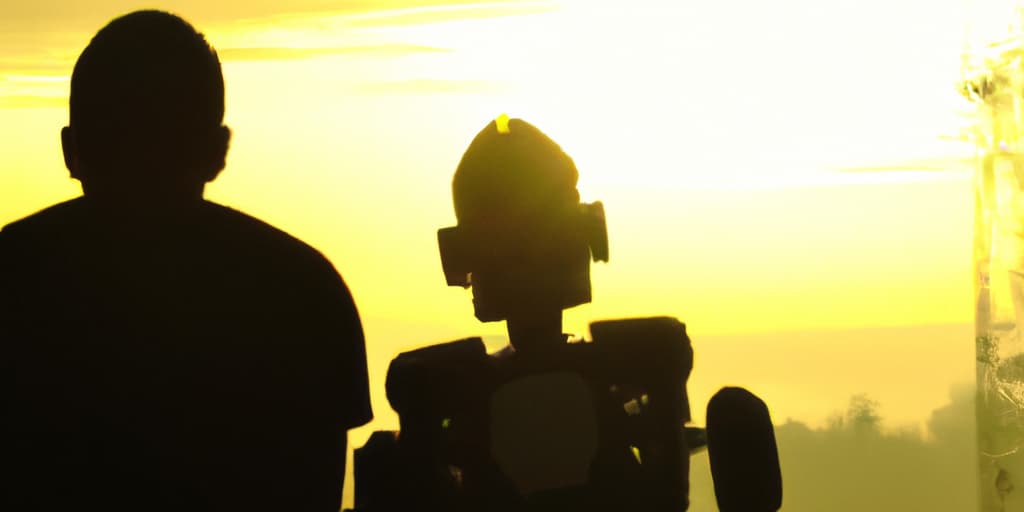
In the process of making software more intelligent, AI has the potential to make brands more human by enabling us to focus increased time and energy on communications, creativity, culture, community, and the human condition.
AI should make us better people, professionals, and organizations. However, this will not happen without a continuous focus on the responsible application of AI across all business functions.

from Marketing AI Institute | Blog https://ift.tt/Keckh9H
via IFTTT
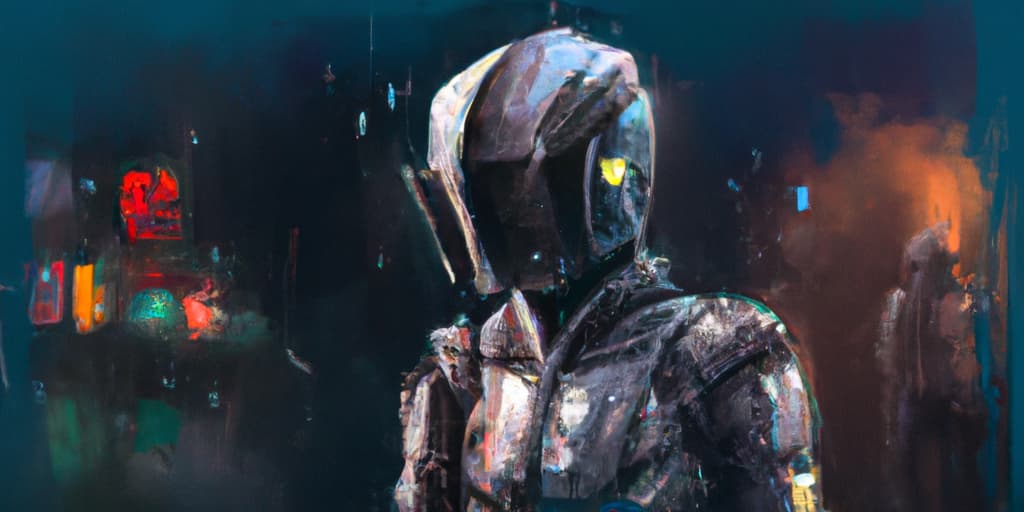
A new investigative report just revealed the dark side of training AI tools like ChatGPT.

from Marketing AI Institute | Blog https://ift.tt/f4w9vmO
via IFTTT

Google just came out guns blazing in the arms race to dominate AI.

from Marketing AI Institute | Blog https://www.marketingaiinstitute.com/blog/google-ai-annoucements
via IFTTT

A 22-year-old created an app that claims to detect text generated by ChatGPT—and he did it over a weekend.

from Marketing AI Institute | Blog https://ift.tt/kh5Us2A
via IFTTT
This week in AI news, we talk about education, an AI arms race, and a very dark side of AI training.

from Marketing AI Institute | Blog https://ift.tt/NsXDcG2
via IFTTT
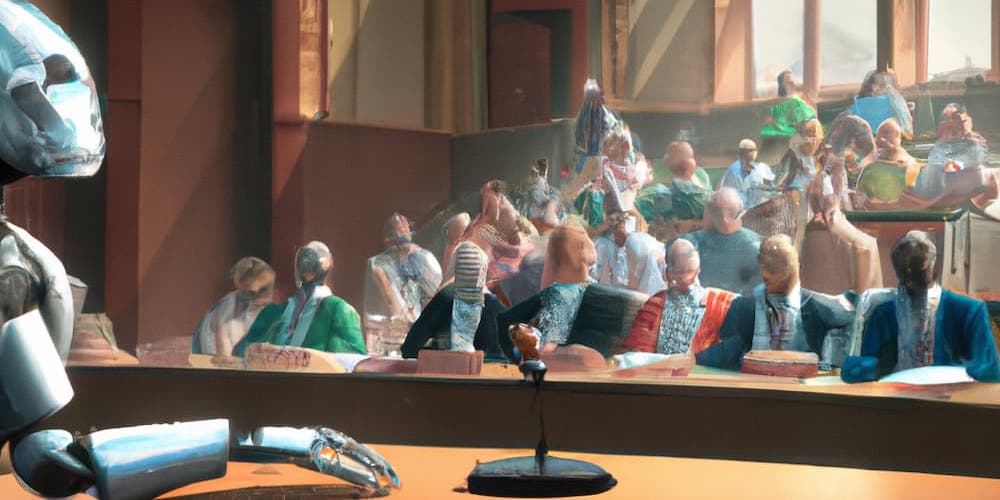
Major generative AI companies are now facing legal challenges that could have big implications for anyone using AI tools that generate text, images, or code.

from Marketing AI Institute | Blog https://ift.tt/OMSDqVt
via IFTTT

Artificial intelligence won’t replace writers, but writers who use AI will replace writers who don’t.

from Marketing AI Institute | Blog https://ift.tt/0cBzGvX
via IFTTT
We're happy to announce that OpenAI and Microsoft are extending our partnership.
This multi-year, multi-billion dollar investment from Microsoft follows their previous investments in 2019 and 2021, and will allow us to continue our independent research and develop AI that is increasingly safe, useful, and powerful.
In pursuit of our mission to ensure advanced AI benefits all of humanity, OpenAI remains a capped-profit company and is governed by the OpenAI non-profit. This structure allows us to raise the capital we need to fulfill our mission without sacrificing our core beliefs about broadly sharing benefits and the need to prioritize safety.
Microsoft shares this vision and our values, and our partnership is instrumental to our progress.
We look forward to continued collaboration and advancing this progress with Microsoft.
source https://openai.com/blog/openai-and-microsoft-extend-partnership/